Author: Malia Rauh

  • From The Stage To The Sideline: Former Track Athlete, Pascal Dobert, Tells All

    From The Stage To The Sideline: Former Track Athlete, Pascal Dobert, Tells All

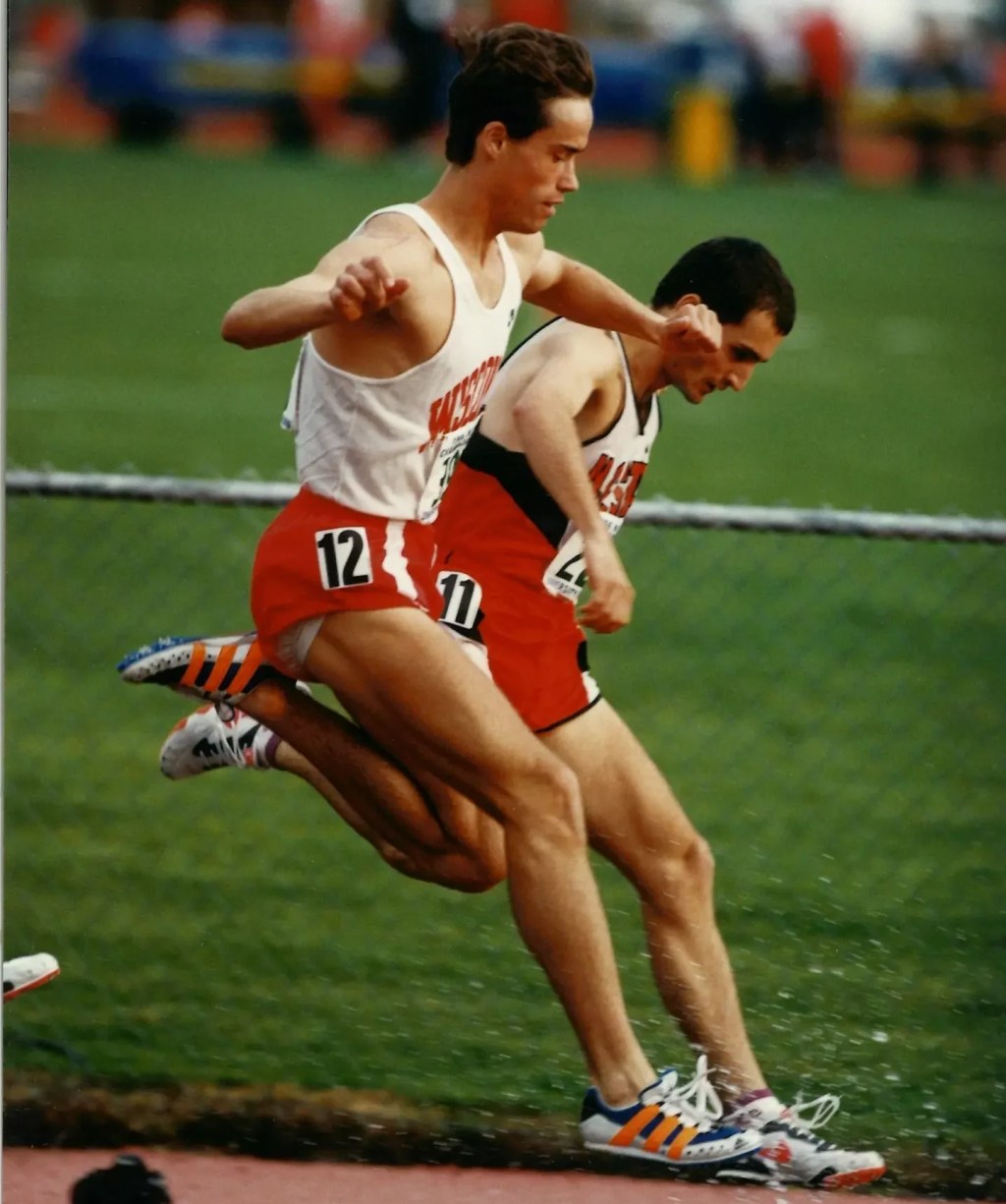
    When it comes to understanding what it takes to compete at the highest levels of running, few people relate. Pascal Doberts is a former Olympian and University of Wisconsin track athlete alum specializing in the 3,000 meter steeplechase. Doberts has experienced the path from elite competitor to coach, giving him a unique perspective on both sides of the sport that continues to evolve daily.

    Pascal Doberts competed in Sydney, Australia for the 2000 Olympic games. He was a track athlete before transitioning into coaching for Nike and Puma athletes, where he now guides the next generation of runners. His dual experience as both elite performer and mentor provides valuable insights into the mental and physical demands of competitive running.

    Let Competitiveness Take Hold

    The difference between finishing and winning races often comes down to what happens in your mind, even when your body wants to quit. For Doberts, the secret wasn’t pre-race rituals or an ultra-specific routine. For him, it was tapping into something more primal.

    “I would just let my competitiveness take hold and deep down know how much I hated to lose, and that made me able to push through when the race started to hurt,” Doberts stated. This is a raw perspective that separates athletes from normal people. In order to beat everyone else, you have to truly want it and let that be your biggest motivator. 

    The Truth Behind Staying Motivated

    Even Olympic level athletes face moments of doubt. For Dobert, this feeling exemplified when dealing with injury. Doberts acknowledged these challenging periods but emphasized the importance of perspective. “I knew the setback was just temporary but it was still so frustrating being on the sidelines.”

    The feeling of quitting was only apparent when an injury caused him a setback in performance. But again, it’s all mental for him. Rather than letting disappointment derail his progress, he used it as motivation to train harder.

    Broadened Perspective 

    The transition from competitor to coach revealed new layers of complexity and reward for Doberts. “As an athlete you really are only thinking about yourself,” he stated, “but coaching is much different in that you have a group of athletes you’re responsible for and having their careers in your hands is a different type of pressure, though very rewarding and fulfilling.”

    This shift from self-focused performance to being responsible for others’ performance represents a fundamental change in mindset. Almost making it incomparable between the two. 

    Tips For Beginners 

    For those intimidated by running, Doberts offers straightforward advice, “Start super slow. Mix in walking with running initially, and gradually increase the running segments. Take it easy and short at first and realize your body is gonna go through some small aches and pains as it adapts to running!”

    His message is clear. Running doesn’t have to be something dreadful. We all start from somewhere, but what matters is consistency. Acknowledge the uncomfortableness and push through. Running can be for everyone. 

  • The Comparison Trap

    The Comparison Trap

    I spent too much time believing that in order to run you had to be good at it. Most of my friends around me could run seven-minute miles and that is where I set the bar for myself too. Creating that mindset for myself is what kept me from even trying to run. And when I decided to try and didn’t achieve my desired time, I was disappointed and didn’t see the point in trying at all. 


    I believe a main barrier to running is the comparison trap. 

    “You gotta run a sub eight-minute mile”

    “I run four miles minimum each time”

    “I only run in the newest Hokas, anything else slows me down”

    These are all lies that cloud people’s minds that prevent them from trying. But the secret is: none of it matters. My biggest piece of advice to give anyone who is on the fence about running, is just to do it. It doesn’t matter how long or fast you go. What matters is your heart rate increases and maybe you sweat a little. And if you decide to, you’ll see the outdoors and fill your lungs with fresh air. 


    You Are Your Greatest Competitor, And Always Will Be

    It’s important to remember that you were not put on this earth to perform. No one is watching you and no one is judging. The only person you need to worry about letting down is yourself. Running can be a place of peace and time with yourself. Pushing your boundaries and seeing where your feet can take you is part of the experience. Every runner started somewhere. Chances are they started from scratch just like you. But no one posts about that.

    Performance Doesn’t Have to Be Consistent

    My last long run before my most recent half marathon was rough. I ran seven miles at a 10-minute pace. This was much slower than previous runs for me so I was feeling very discouraged for my race just days away. Instead of feeling that runners high everyone talks about, I was feeling discouraged and honestly debated even doing the race. I completed the half marathon faster than ever before. Running keeps me on my toes (figuratively and literally). It was rare to run multiple times a week and feel good about all of them. Some days are just better than others. This was a surprising lesson I had to learn but I’m glad I did. There are so many factors that go into how your body performs each day. It’s important to give some grace.


    Your first run is waiting for you. All you have to do is start.

  • Data Eye Candy: For Runners

    Data Eye Candy: For Runners

    Women’s Running Magazine:

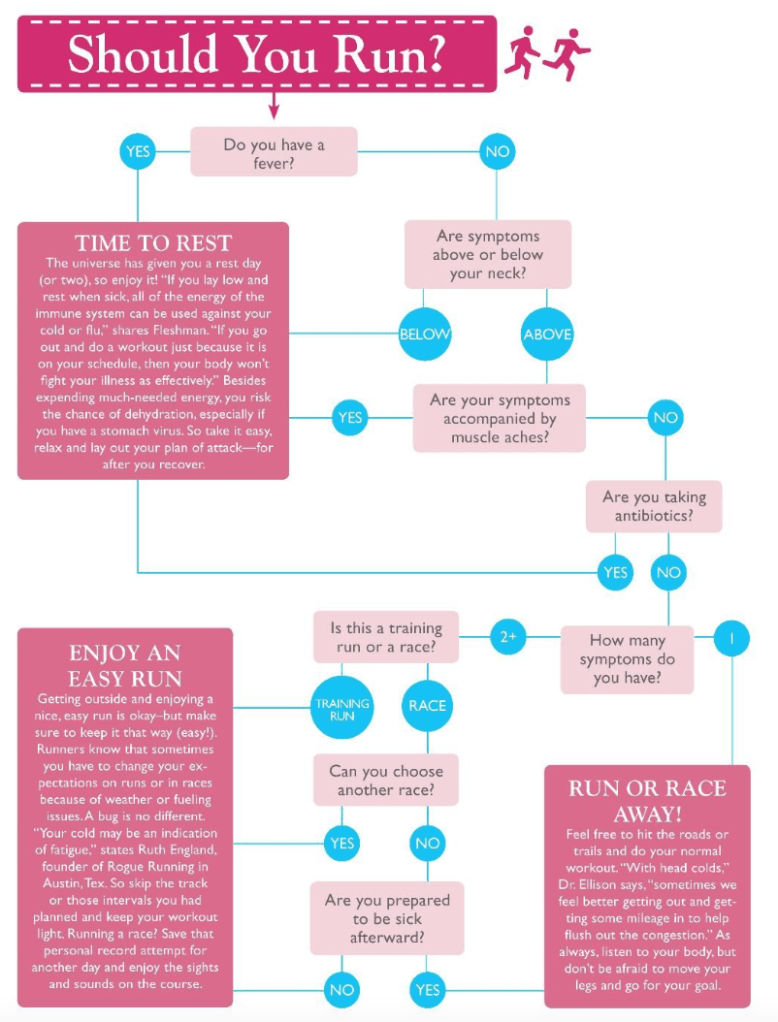
    I found the first infographic from Pinterest, created by Women’s Running Magazine. I chose it because I thought the topic is something everyone contemplates at one point, but never really talks about. There have been many times when I debate whether or not I should run depending on how I feel. There have been times when I’m getting over a sickness, and sometimes a light run is the last thing I need to get over it. Other times, it makes it worse. This chart is helpful when figuring out how you feel. 

    I find this infographic to be effective for what it is made to do. The main reason I chose it was because of the choose your own adventure aspect. I think it’s different and it’s more interactive and fun for people to read. It kept me engaged the whole time. The lack of visuals kept the overall look very clean and straight to the point. I want to take that aspect into my infographic. The simpler and more straightforward the infographic is, the more people will read (and hopefully learn) from it. 

    The Running Clinic:

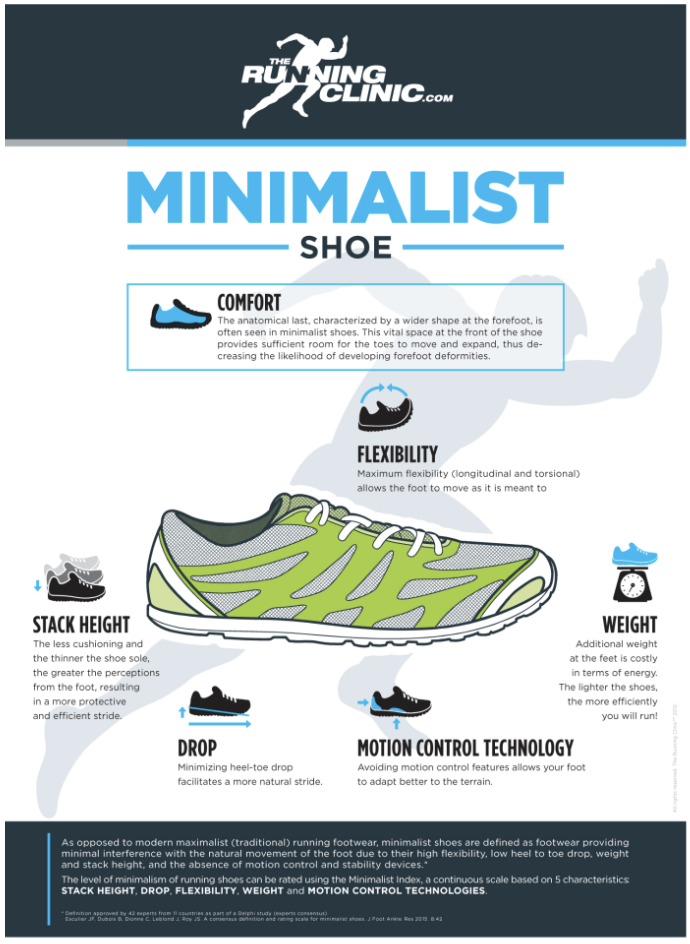
    What stood out to me from this infographic was the use of minimal, but large, images and visuals. It makes it easy to read and understand in a short amount of time. For me personally, if an infographic has too many words in small font, I won’t read it. I like this one, made by The Running Clinic, does a good job at being informative but not boring. Which can be difficult sometimes depending on the information. 

    Something I want to incorporate into my infographic from this one is the use of a focal image. Using a large image can demonstrate to the reader what the point of the infographic is with no words. The tricky part with that is how to keep the reader engaged after that. The use of smaller images with a paragraph underneath did a good job at keeping it interesting and easy to understand. 

  • How To Come Back After A Half Marathon

    How To Come Back After A Half Marathon

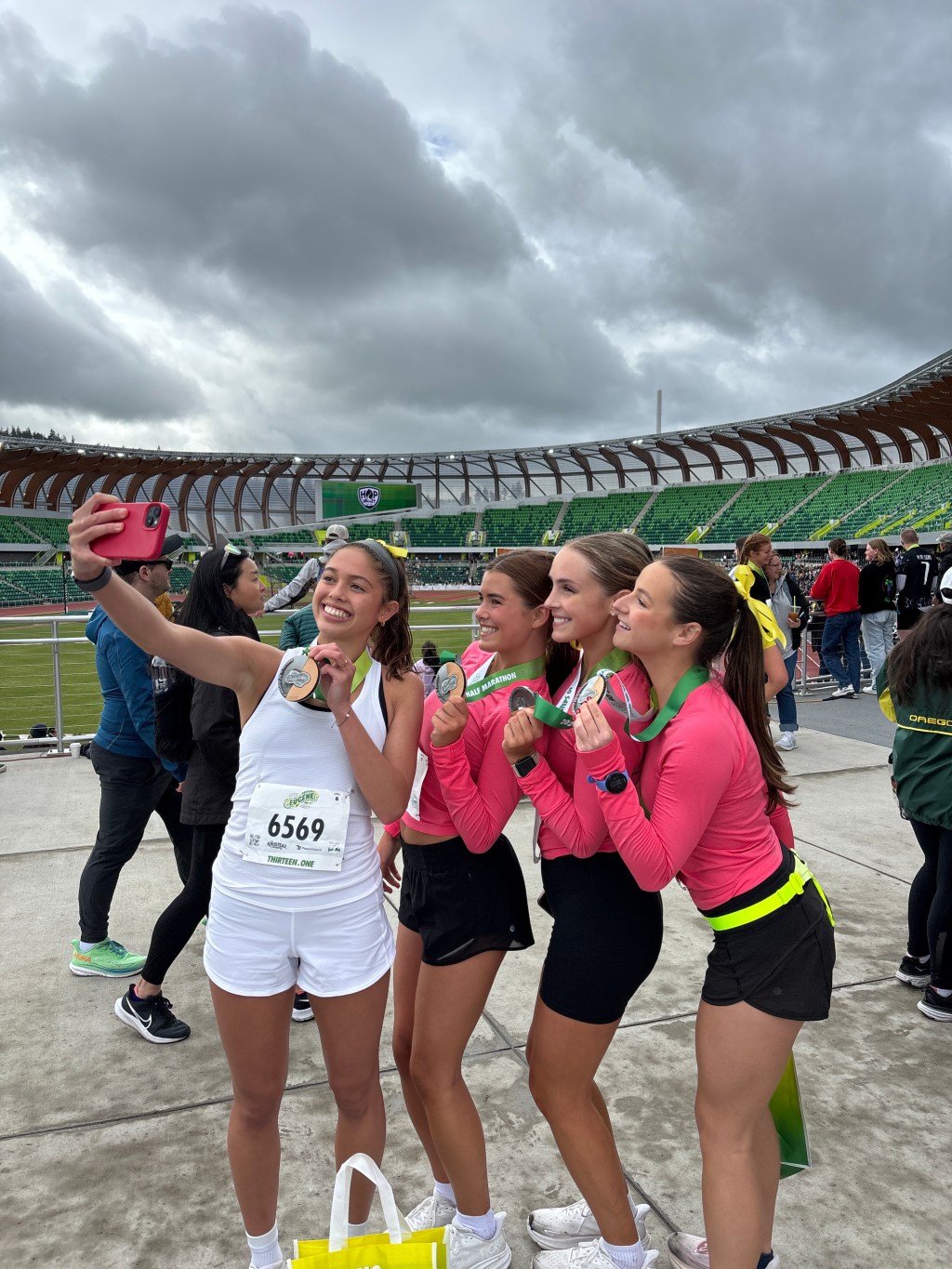
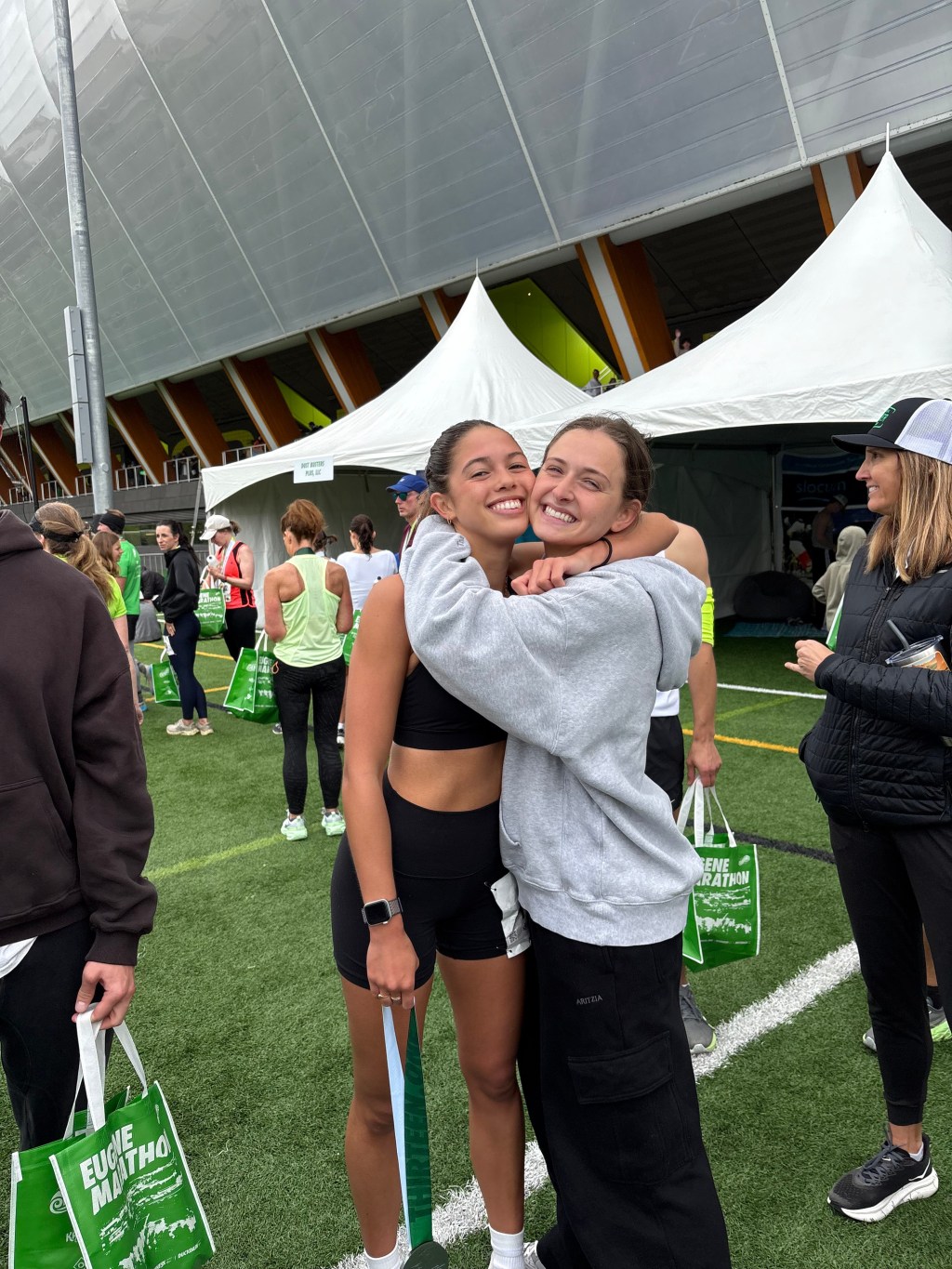
    After crossing the finish line of the Eugene Half Marathon three weeks ago, I discovered that recovery is just as important as training. Here’s what I’ve learned about bouncing back after running 13.1 miles!

    Immediate Post-Race Recovery

    After running for roughly two hours straight, your legs and body have a lot of adjusting to do. You’re going from 0-100 in literally five seconds. The tired, shaky, and soreness in your legs will onset shortly after the race. It’s important to take a second and acknowledge all your body is feeling- it’s not everyday you run 13 miles. 

    My post-race checklist now includes:

    • Walking for 10-15 minutes to gradually cool down
    • Hydrating with electrolytes, not just water
    • Eating everything I can

    The 24-Hour Plan

    It can be easy after a race to immediately plop down on your couch or bed and stay there for the next day. But this is a crucial time for your body when healing. I tried lightly stretching every-other hour or got up and walked around my house. The more you stay mobile (even a little bit), the better. 

    And if you have really nice roommates, they might massage your legs. 

    The Week After

    For me personally, I felt peak soreness two days after the race. I was tight and it felt painful to do virtually anything. After knowing that pain, I felt more prepared going into my second half marathon. A game changer for me was to stretch my legs IN the shower. The hot water and steam helped my muscles relax so much more. I’m not kidding, my legs felt better and looser directly after I did that. I also incorporated adding electrolytes to my water consistently for a few days after the race. Staying hydrated is key for your body to recover. 

    Sleep Is Your Best Friend

    Do not overlook this step. Your body needs it. Try to get eight hours minimum for a few days after the race. You’d be surprised how much your body recovers while you’re sleeping. Restless or minimal sleep can prolong the recovery process and hurt your body further. So grab your water and go to sleep. 

    This Is What Worked For Me

    Running, again, is much a personal experience. Every body is different, so give yourself some grace if it takes you longer than others to recover. You’ve done an amazing thing, so don’t forget to give yourself some credit!

  • Embracing the Drizzle: Why Running in Eugene Rain Isn’t So Bad

    Embracing the Drizzle: Why Running in Eugene Rain Isn’t So Bad

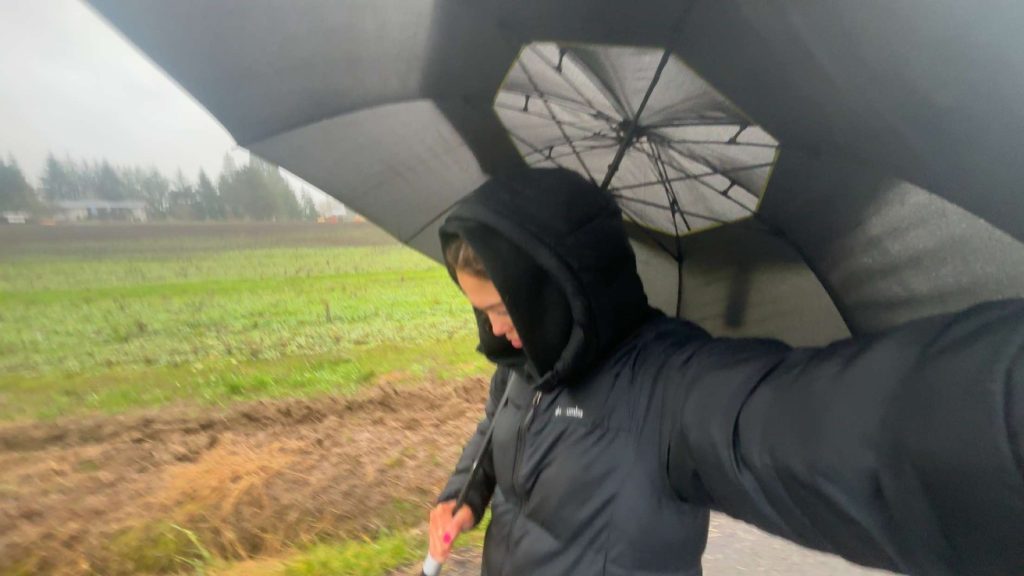
    One of my biggest pet peeves when coming to the University of Oregon from living in Portland, was the amount of people who thought that because I was from Oregon, I liked rain. This is actually untrue believe it or not. I actually don’t prefer cold raindrops on me for nine months of the year. I am, however, more prepared for when it does rain. So I’ll give that to them. I’ve learned how to live in the rain. 

    The Perfect Temperature

    Eugene temperatures are raley cold enough to keep me inside. But I won’t lie- the raindrops are a wake up call. When the two mix, it creates the ideal running temperature. It becomes cool enough to prevent overheating but not so cold that your muscles seize up. That constant battle between “warm” and cold acts like a natural cooling system, keeping you refreshed mile after mile. After experiencing summer runs in Eugene’s 90 degree heat, a 60 degree rainy day suddenly isn’t that bad.

    It’s Actually Good for Your Mental Game

    Running through rain builds psychological toughness that treadmill sessions never will. There’s something empowering about running in the rain. The combination of music and rain creates a cinematic-like picture in my head. It reminds me of my resilience, which can be easy to forget. And the post-rain-run feeling is so rewarding. Taking that hot shower afterwards is one of Eugene’s finest bonuses, and somehow it feels earned in a way that sunny-day runs never quite match.

    So, the next time you look outside your window at those grey clouds, don’t automatically reach for your student ID to swipe into the rec center. There’s a special kind of Pacific Northwest runner’s high waiting for you out there in the rain. After all, we’re Ducks, shouldn’t we feel right at home in the water?

  • Tips To Distract You While Running

    Tips To Distract You While Running

    Running is a funny concept for me because I try to focus on anything else but running. That’s the key that keeps me going. Some of my non-negotiables are the following:

    • MUSIC – this might be a universal truth
    • A fun and engaging location – keeps things interesting
    • A piece of gum – my most unique running quirk 

    Music

    Running with music is the majority of people. It honestly catches me off guard when I see someone running with no headphones on. However, this is not the tip I want to provide. In the past year I’ve discovered tempo running. This entails running to a playlist that beats matches the pace at which you run at. This is good for consistent running which can improve your distance. It also reintroduces you to songs you forgot about 🙂

    Where You Run Matters

    I was always an active kid growing up. I was involved in sports and extracurriculars that kept me active. And if there was a lull in my schedule, my parents and friends kept me busy. That is something I am really grateful for. Transitioning to college came with many life adjustments and finding ways to stay active was one of those. Once I discovered some of Eugene’s nooks, being active became easier. My freshman year of college I discovered one of my favorite neighborhoods to run in. The houses reminded me of the neighborhoods from home and I found myself going there when I was sad or lonely, and it never failed to make me feel better. 

    Gum? Gum!

    This is my most non-typical tip. I’ve been finding myself popping a piece of Extra Spearmint gum everytime I go for a run for years now. I’m not sure if it’s the taste I’m drawn to or the chewing itself, but whatever it is, I need it. For the past two half marathons I’ve completed, I’ve asked my family and friends to bring me a new piece of Extra Spearmint gum at checkpoints. I’ve concluded I could not have run that far without it. 

    Your Turn

    Running is a very vulnerable and personal experience. Everyone has their own quirks and running rituals. But if mine could help one person, I’d consider that a win. 

  • LuluLemon’s Corporate Social Responsibility Campaign – “Together We Grow”

    LuluLemon’s Corporate Social Responsibility Campaign – “Together We Grow”

    Lululemon Athletica, a Canadian athletic apparel company, launched its “Together We Grow” Corporate Social Responsibility campaign in 2024. It was created to promote holistic well-being through physical movement and community connection. This initiative aligns with lululemon’s core values of wellness, inclusivity, and responsibility to curate a positive social impact. All aiming to address the growing concerns around mental and physical health.

    Campaign Overview

    In October of 2024, lululemon launched their “Together We Grow” campaign. The campaign  was a global initiative that encouraged people to engage in physical activities as a group. It aimed to emphasize the positive impact of communal movement on mental and physical health. A key piece of the campaign was the #TogetherWeGrow Challenge. The challenge was to obtain one million minutes of communal wellness activities. The campaign stretched across Asia, Australia, and New Zealand. Each country has its own ambassadors that speak and create content about how crucial it is to stay active and to stay together. 

    Communication Strategies

    The Together We Grow campaign reached audiences through a number of ways. Lululemon utilized global ambassadors, a shared hashtag and community events. The campaign’s digital presence was sent through the #TogetherWeGrow hashtag. People were encouraged to share their group activities/workouts on platforms like Instagram and X. Each post contributed to the collective movement goal, creating a sense of unity and community across oceans. 

    Lululemon also organized a series of events worldwide to foster community engagement. 

    • Australia featured a movement day that included yoga, running and dance sessions
    • Hong Kong created mobility sessions and discussions on mental health led by the global ambassadors
    • New Zealand organized group running sessions
    • The UK and Dubai held events such as yoga sessions, wellness workshops, and panel discussions on World Mental Health Day

    Effectiveness and Impact

    The campaign successfully met its goal of one million minutes of collective movement, and provided wellness activities and group physical activities for communities. The social media engagement was substantial. It hit their demographic well and collected thousands of posts with the campaign’s hashtag. The campaign’s integration of personal stories from the global ambassadors and community members added another layer of authenticity. It was a reminder for people that they are not alone in their struggles and setbacks. 

    Alignment with Brand Values

    “Together We Grow” stayed aligned with lululemon’s mission to bring positivity and inclusivity to the world of physical and mental well-being. By focusing on collective movement and mental health, the campaign addressed wellness challenges and created and fostered inclusivity and community engagement. The initiative also aligned with lululemon’s ongoing sustainability efforts regarding their clothing. Some efforts include using recycled nylon garments and material innovation. 

    To Wrap It Up

    Lululemon’s “Together We Grow” campaign effectively combined strategic communication, community engagement, and authentic storytelling to promote wellness and social responsibility. The initiative not only reinforced the brand’s core values, but also made an impact on communities worldwide. They met each countries’ needs and had a diverse range of wellness activities to help reach a larger community of people. Wellness and physical health can look different to different people. Lululemon bridged that gap by creating an inclusive environment for all. 

  • Running Doesn’t Have to Be Punishment

    Running Doesn’t Have to Be Punishment

    Context

    I grew up playing field sports. I always saw running as a punishment for poor practice or a bad game. It was never something I did, willingly. I was always confused by people who would go for long runs for fun. It wasn’t until I graduated high school and no longer had a mandatory practice to attend that I got into running. 

    Finding Familiarity In A New Place

    College is a time of change. Learning to share a space with a stranger is always something to navigate as a freshman. Your only “private” space was your bed. I knew I needed a time and a place that could be all mine. I just needed to be alone sometimes. And that’s where running came in. I discovered the neighborhood behind my dorm was a place that reminded me of home. There were big lawns with trees and people walking their dogs. And it seemed virtually untouched by the stereotypical college neighborhood scene. I knew this needed to be the place I went when I needed to be alone. And it did. I would put my airpods in and just go. Every run looked different. I spent a lot of time exploring new streets and burrows. I got familiar with the area very fast. It almost felt like the running became second, and it was about the peace I found while exploring by myself. 

    Filling Time In A New Way

    This feeling didn’t go away after my freshman year. It stayed with me my sophomore year when I moved into my sorority house. I remember trying to chase that familiar feeling at times when I couldn’t be around people anymore. Running became a way to stay active and to support my mental health. Which is something I would never have thought I’d say. 

    Finding People Who Felt the Same Way

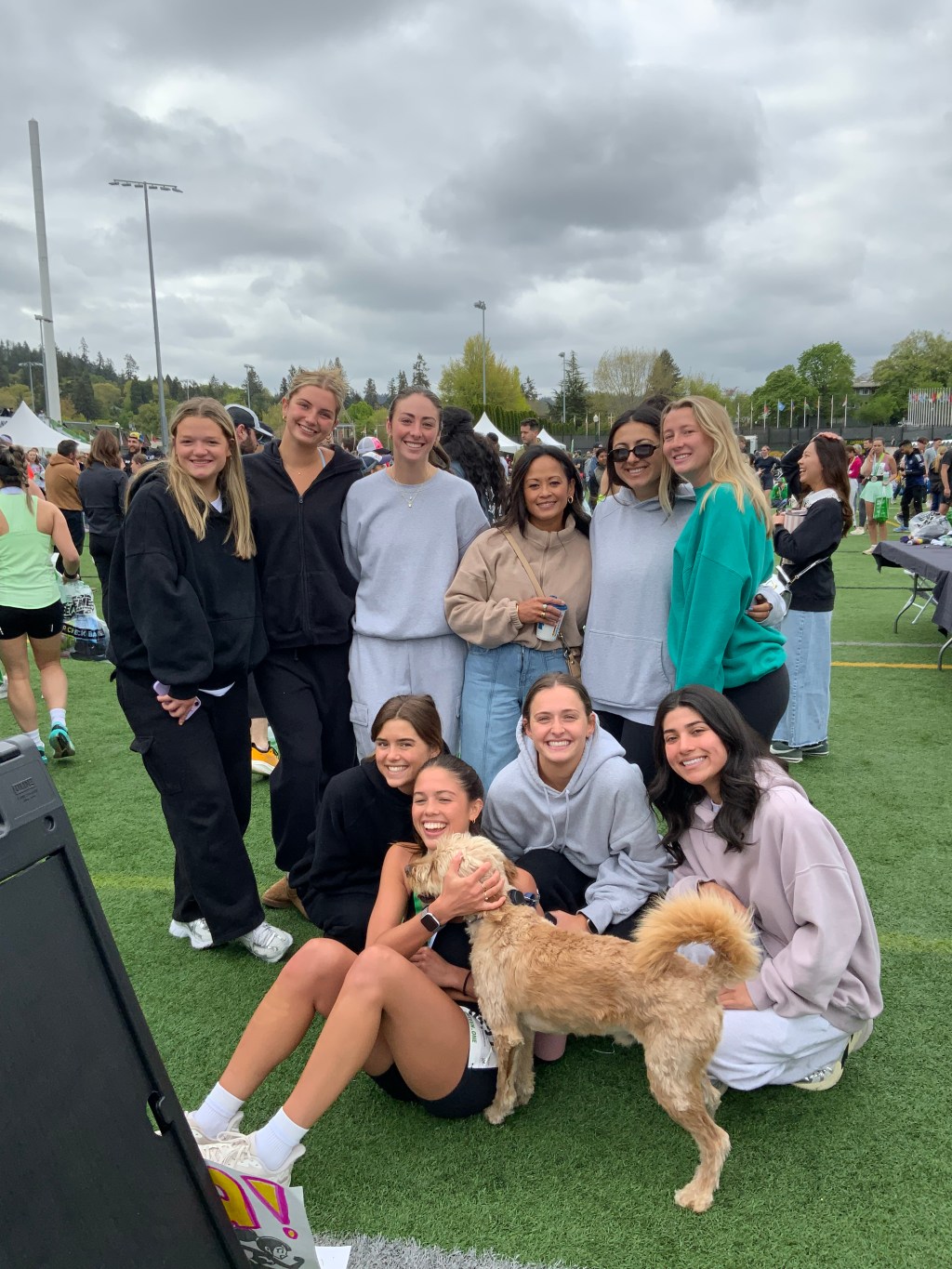
    A surprise to me was that this feeling I discovered was, in fact, not invented by me. Many other people did exactly as I was doing with running. It acted like an escape from the routine of everyday life. I found girls living in my house who ran for fun. We began sharing running routes, mileage and running clothes. These later would become the same girls I finished my first half marathon with later that year. 

    I didn’t know the impact running would have on me until I was struggling. And who knows, it might help you too. 

    Here is the link to my friends and I’s favorite running shoes, and here’s the link to our favorite trail to run in Eugene. 

  • Why Girls on the Run Matters — and Why It Matters to Me

    Why Girls on the Run Matters — and Why It Matters to Me

    Finding Strength Through Running

    As a college student and someone who recently completed my second half marathon, running has become way more than just exercise to me. It’s become  a place where I challenge myself, clear my mind, and find strength I didn’t always know I had. That’s why when I learned about Girls on the Run, I knew I wanted to share their mission.

    What is Girls on the Run?

    Girls on the Run is a nonprofit that empowers young girls through running. It’s about more than just crossing a finish line. It’s about building confidence, setting goals, and creating a supportive space where girls can move freely and feel strong. Through running programs and mentorship, Girls on the Run helps girls develop the skills they need to navigate life’s challenges with resilience and positivity.

    Why This Mission Feels Personal

    Thinking back to my own running journey, I realize how powerful having an outlet like that would have been when I was younger. I didn’t always feel confident in myself, especially when it came to sports. It wasn’t until recently that I found real joy in running, and discovered what my body and mind are capable of. Programs like Girls on the Run give young girls the opportunity to experience that feeling much earlier: to see themselves as athletes, leaders, and strong individuals from the start.

    It’s About More Than Running

    What I love most about Girls on the Run is that it’s about community, not competition. It’s not about who’s the fastest but it instead emphasizes showing up for yourself and others. It’s about learning to keep going, even when things get hard. These lessons go past running.

    How You Can Support

    As someone who’s experienced firsthand how running can build resilience and confidence, I’m incredibly inspired by the work this organization is doing. Organizations like this are helping to create a new generation of strong, self-assured young women, and that’s something worth celebrating. 

    If you’re interested in learning more, volunteering, or even donating, I highly encourage you to check out their website. Empowerment starts with opportunity, and sometimes, all it takes is a pair of running shoes and a little encouragement to change a girl’s life.

  • How I Beat My Half Marathon Time — Without Training

    How I Beat My Half Marathon Time — Without Training

    Setting the Scene

    If you had told me a few months ago that I would beat my half marathon time from last year – without actually training – I would’ve laughed in your face. 

    I’m a 21-year-old college student at the University of Oregon, and like most good intentions, my plan to “properly train” for my second half marathon started strong but quickly derailed. Classes and work piled up, weekends filled up with friends and events, and before I knew it, race day was staring me down, and I was nowhere near ready.

    The week leading up to the race was filled with stress. I kept thinking about how underprepared I was. I even debated not showing up. But a part of me refused to back out. I figured if I could just cross the finish line, I would be happy.  No expectations, no pressure, just running. 

    The Morning of the Race

    Race morning felt surreal. I woke up to my 5:30 a.m. alarm, ate half of an everything bagel, and questioned every decision that had brought me to this point. As I pinned my bib to my shorts, I tried to block out the doubts racing through my head.

    At the starting line, the energy of the crowd was easing my mind. It reminded me of why I was there. Even though I felt like an impostor standing among so many serious runners, I kept reminding myself to have fun. The current Tiktok trend that kept recurring in my mind was that this was the whole point. No matter how slow. No matter how messy.

    The first few miles were tough, but not in the way I expected. My legs found a rhythm faster than I thought they would. My breathing settled. I stopped checking my watch obsessively and just ran by feel. I was actually ahead of my pace from last year.

    A Surprising Finish

    By mile ten, I was tired, but adrenaline (and maybe a little stubbornness) kicked in. When I finally crossed the finish line and saw my time, I couldn’t believe it — I had beaten last year’s time by several minutes.

    It wasn’t the perfect race I had imagined when I first signed up months ago. But it was real, gritty, and somehow even more rewarding.

    Final Thoughts

    This race taught me that showing up matters. You’re capable of more than you think, even on the days you doubt yourself the most. Sometimes, the biggest wins come when you least expect them.